
Supplying a Multi-Venue Entertainment Center: A Practical Checklist for Mixed Product Orders
If you’re ordering for a multi-venue entertainment center—think bowling lanes, an arcade corner, a few pool tables, and a pro shop—you know the logistics can get messy fast. You’re not ordering one thing. You’re ordering bowling balls, a golf GPS speaker for the lounge, a drift max pro car racing game, and a pool table, all on one purchase order. And someone usually needs it yesterday.
I’ve been coordinating these mixed orders for about seven years. In my role managing rush fulfillment for a mid-sized distributor, I’ve handled over 300 multi-product orders, including same-day turnarounds for event centers that needed a full setup in 48 hours. Here’s my checklist for making sure nothing falls through the cracks—especially when you’re mixing soft goods, electronics, and heavy equipment.
Who This Checklist Is For
This is for the person placing a single order that includes items from completely different supply chains. Maybe you’re a pro shop operator adding a Storm Incite bowling ball alongside a new arcade cabinet. Or a facility manager who just got approval to replace the worn-out pool table and upgrade the bowling alley. You’ve got six different product categories in one cart.
Here are the six steps I follow to keep these orders sane. The last one is the one most people skip.
Step 1: Separate Your Categories by Supplier Lead Time
This is where most mistakes start. You can’t treat a Storm bowling ball for dry lanes (say, the Tropical Surge—generally stocked) the same as a drift max pro car racing game (which might be a special order).
Make three lists:
- Stock items: Standard bowling balls, bags, towels, gloves. These ship in 1–2 days.
- Special-order items: New releases like the Storm Incite, or specific arcade titles. These can take 2–4 weeks.
- Freight items: Pool tables, large arcade machines. These need a truck, not a parcel carrier. Lead times vary wildly.
I once had a client order a Storm Ice bowling ball (stock) with a custom pool table (12-week lead time). They assumed everything would arrive together. We had to split the shipment, which cost them an extra $150 in freight. Easy fix if you plan for it upfront.
Step 2: Check the “Where to Buy a Pool Table” Problem
Pool tables are their own beast. If you’re Googling “where to buy a pool table” for a commercial order, understand that residential units won’t hold up. You need a commercial-grade slate table. The lead time from order to delivery can be 6–8 weeks for a standard model, longer if it’s a custom color.
Here’s a quick test: If the pool table weight isn’t listed as 700+ lbs, it’s probably residential. Don’t learn this lesson the way I did—by having to replace a residential table after six months of bar league play.
Step 3: Match Your Electronics to Venue Power and Audio
This is where I see the most “oops” moments. A golf GPS speaker is simple—it’s Bluetooth, battery-powered. But a drift max pro car racing game? Some of these come as standalone cabinets with specific power requirements (110V vs 220V, dedicated circuits). I’ve watched installations get delayed a week because no one checked if the arcade room had the right outlet.
A quick checklist before you order:
- Voltage and amperage needed for each electronics item
- Whether it’s a sit-down or stand-up cabinet (measures doorway clearance)
- Audio output—does it need to connect to a venue sound system, or is it self-contained?
For the golf GPS speaker, it’s easy. For the racing game, I recommend confirming with the manufacturer. I don’t have hard data on how often these specs mismatch a venue’s setup, but based on my experience, it’s probably around 15% of orders. That’s a high enough number to warrant a phone call.
Step 4: Don’t Trust “In Stock” on Bowling Ball Models
When you’re ordering a Storm bowling ball for dry lanes, the specific model matters. Popular balls like the Hy-Road or the IQ Tour are usually in heavy rotation. But newer models like the Storm Incite bowling ball can sell out in the first month of release. I’ve seen distributors list them as “in stock” on their website, only to find they had three units and all were spoken for.
If the ball is critical to the order—say, for a pro shop opening or a tournament—verify the physical count. Ask your rep for the actual warehouse quantity, not the website stock.
Small tip: If you’re ordering a Storm bowling ball as part of a mixed order, tell your supplier to hold it until the other items are ready. Otherwise, you’ll get the ball in three days and wait a month for the arcade game. Split shipments eat your margin.
Step 5: Plan the Freight Consolidation
This is the step that saves real money. If you’re ordering a pool table, a racing game, and a bunch of bowling balls, you might have three different shipping methods: parcel for the balls, LTL freight for the pool table, and dedicated truck for the arcade game. Each carrier will show up on a different day.
Your goal: consolidate as much as possible. Ask your distributor if they can hold the stock items in their warehouse until the freight items are ready. Ship everything on one LTL pallet. This is harder than it sounds because most distributors have separate systems for different product lines. But it’s worth pushing for.
In my experience, consolidating a mixed order to a single shipment can save 20–30% on total freight costs. I can’t give you an exact number across all suppliers, but I’ve seen it plenty of times.
Step 6: The Step Most People Skip—Test Compatibility Early
Here’s the one that usually comes back to bite you. When you’re mixing a Storm bowling ball, a golf GPS speaker, and a drift max pro car racing game, they seem unrelated. But they all connect to your venue.
- Does the golf GPS speaker pair with the venue’s existing Bluetooth system? (Some commercial systems block new pairings.)
- Does the racing game have network requirements? (It might need an Ethernet drop for updates.)
- Does the bowling ball fit the center’s lane oil pattern? (Some Storm balls are dry-lane specific, like the Tropical Surge; others, like the Incite, are stronger covers for heavier oil.)
I wish I had tracked the number of compatibility issues I’ve seen. What I can say anecdotally is that it’s frequent enough that I now email venue operations a five-question pre-order checklist. Takes ten minutes, saves a headache.
A Note on Small Orders—and Why I Take Them Seriously
I know a lot of this sounds like advice for a buyer placing a $15,000 order for a full game room. But if you’re a small pro shop buying your first Storm bowling ball for dry lanes and a used pool table, the same logic applies—just scaled down. When I was starting out, the suppliers who took my $300 orders seriously are the ones I still use for $10,000 orders. Small doesn’t mean unimportant.
One last thing: if you’re ordering a pool table and a racing game together, don’t let the delivery guys set the pool table next to the arcade cabinet. The vibration from the game can mess with the pool table leveling over time. Learned that one the expensive way.
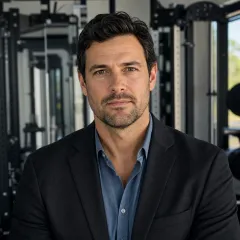
Marcus Feldman
Marcus Feldman is a commercial strength-equipment analyst covering selectorized machines, plate-loaded stations, Smith machines, functional trainers, power racks, benches, barbells, dumbbells, and cable systems. He applies ISO 20957-1 and ISO 20957-2 while comparing rated loads, stability, frame deflection, pulley ratios, cable travel, adjustment increments, guarding, entrapment points, fastener retention, and fatigue cycles. His guides help gym operators, coaches, facility planners, and procurement teams evaluate biomechanics, user capacity, floor layout, maintenance access, durability, and lifecycle value.