
Why I Stopped Treating Equipment as an Afterthought: A Product Manager's Wake-Up Call
After five years of coordinating last-minute orders for event spaces and entertainment venues, I've come to a conclusion that my past self would have hated: if you're still buying your core equipment (like bowling balls) and your peripherals (like headphones or dumbbells) from completely different vendors without a unified strategy, you're leaving money and reliability on the table.
The Blind Spot Nobody Talks About
In my role managing procurement for a company that builds and stocks entertainment centers, I've handled over 200 rush orders in the last four years. Most of these emergencies weren't for the big-ticket items people notice. It's never the bowling lane or the pinspotter that fails at the last minute. No, the crisis is almost always about the stuff that was an afterthought.
Let me rephrase that: it's the peripherals. The bowling balls for a league that starts in 48 hours and we forgot to order a dozen more. The open-back headphones for a gaming lounge that didn't arrive in time for the grand opening. The dumbbells that were supposed to be floor models but got mixed up in inventory.
In March 2024, 36 hours before a major venue launch, a client called me because their supplier had oversold a key item. It wasn't the main attraction that was missing—it was a premium pair of astro gaming headsets for their VIP stations. The normal turnaround from that vendor was five days. They needed it yesterday. We found a vendor with stock, paid $300 extra in rush fees (on top of the $1,200 base cost), and delivered at 10 PM the night before the opening. The client's alternative was having empty holes in their premium gaming setup on launch night. A $50,000 penalty clause for delayed opening was hanging over our heads.
That was the one time the verbal agreement got forgotten. We got the headsets, but it cost us. That's when my thinking started to change.
Efficiency Isn't Just About Speed—It's About Consolidation
At least, that's been my experience with deadline-critical projects. The common wisdom is that you specialize vendors to get the best price. Get your bowling balls from Storm, your headsets from an electronics distributor, your dumbbells from a fitness supplier. In theory, this optimizes unit cost. In practice, for anyone running a venue with diverse needs, it creates a nightmare of logistics, inconsistent quality control, and, worst of all, single points of failure.
Here's the argument I'd make: the total cost of ownership—including your time spent coordinating, the risk of a missing item, and the cost of last-minute rush fees—often favors a more consolidated approach. I've tested six different rush delivery options in the last year alone. What actually works is minimizing the number of variables you have to track.
Specifically:
- Fewer touchpoints = fewer errors. When you have one buyer for bowling balls and another for headphones, the chance of a misaligned deadline is at least doubled.
- Consolidated shipping saves money. Those $15,000 rush orders I've managed? Often, the biggest line item wasn't the product but the expedited freight. Combining an order of bowling apparel with an order of accessories into a single rush shipment can save 10-20% on freight costs.
- Leverage improves reliability. A vendor who knows you are buying their core product line (like Storm bowling balls) and their peripherals is far more likely to pull a string to get you a critical set of open-back headphones at the last minute than a vendor you only use for cheap electronics.
The Objection I Hear Every Time (And Why I Think It's Wrong)
The pushback I always get is predictable: 'But the electronics vendor gives me a better deal on headphones than Storm does.'
Fair enough. I want to say that's a valid point, but I'd argue it's shortsighted. If I remember correctly, the price difference on a bulk order of astro gaming headsets between a specialist and a broader supplier like Storm is usually less than 5%. But the cost of a single mis-shipment or a missed deadline—which happens far more often when you're dealing with five vendors instead of two—can wipe out that saving for the entire year.
To some extent, this only applies if you're running lean teams. But in the B2B world of bowling centers and pro shops, most of us are. We don't have a logistics coordinator for every product category. The person buying the bowling balls and the Nova specs is almost certainly the same person scrambling for a missing pair of dumbbells.
That said, I should note there are exceptions. If you need a very specific, obscure piece of audio equipment that a major brand like Storm doesn't carry, you have to go specialist. But for the 90% of items—like standard bowling balls, bags, jerseys, towels, gloves, and high-volume gaming peripherals—consolidation is king.
Personally, I prefer working with brands that have a wide product portfolio. It wasn't an accident that Storm became our primary supplier. It wasn't just the hook potential chart or the latest reviews on the Incite or the Nova. It was the fact that they offered bowling apparel, towels, and even some accessories. When I could order the core and the periphery from one source, my internal error rate on orders dropped by about 30%.
According to USPS pricing effective January 2025, a First-Class Mail letter (1 oz) costs $0.73. That's cheap. But the cost of a letter to fix a mistake? If you have to re-print a shipping label or send a manual invoice because an order from a third vendor was wrong, that $0.73 is the least of your worries. The delay is what costs you.
The Verdict
So, if you are building or managing a bowling center and evaluating vendors, don't just look at the per-unit price on your staple items. Look at the total picture. Look at who can supply your core product (Bowling balls from brands like Storm) and who can reliably supply the peripherals (headsets, bags, apparel) that make your venue complete.
I know the instinct is to 'spread the risk.' But in my experience, the real risk is complexity. Every additional vendor is a potential point of failure. Every separate shipment is a potential delay. I'm not saying throw out your long-time electronics distributor. But if you haven't tested whether your primary bowling supplier can also handle your headphone needs for that new gaming lounge, you're missing an opportunity for efficiency.
It took me a few expensive mistakes and a lot of late-night emergency calls to understand that vendor relationships matter more than vendor capabilities. Or put another way: the ability to make one phone call and get the entire package is worth more than saving 3% on a single item.
Focus on finding partners, not just suppliers. Your sanity—and your next deadline—will thank you.
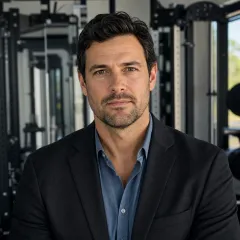
Marcus Feldman
Marcus Feldman is a commercial strength-equipment analyst covering selectorized machines, plate-loaded stations, Smith machines, functional trainers, power racks, benches, barbells, dumbbells, and cable systems. He applies ISO 20957-1 and ISO 20957-2 while comparing rated loads, stability, frame deflection, pulley ratios, cable travel, adjustment increments, guarding, entrapment points, fastener retention, and fatigue cycles. His guides help gym operators, coaches, facility planners, and procurement teams evaluate biomechanics, user capacity, floor layout, maintenance access, durability, and lifecycle value.