
Bowling Green Storm Damage: A Storm-Bowling Rush Order Story
Tuesday, 7:42 AM
I was on my second cup of coffee when a manager from a Bowling Green, Kentucky, entertainment center called. A storm had gone through over the weekend. Roof damage, flooded carpet, and water in the back-end returns (the machines that get the balls from the pit back to the table). The lanes themselves were okay, but the pro shop inventory was soaked, and the kids’ zone needed a full rebuild.
“We have a youth tournament in eleven days,” she said. “If we cancel, those families won’t come back next year.”
Bowling Green storm damage is not a normal rush order
I coordinate rush orders on the storm-bowling wholesale side. We get a lot of “we must have it by Friday” calls. But Bowling Green storm damage was a different animal. After a disaster, the center isn’t waiting on one shipment. It’s waiting on everything at once: balls, bags, gloves, wrist braces, jerseys, and the small stuff that doesn’t make the highlight reel.
The list she sent was long. Then came the part that made me blink.
“We also need soft-play playground equipment for the kids’ area and home gym equipment for the fitness corner.”
We don’t make those. But we could source them. The question was whether we could do it inside a deadline measured in days, not weeks.
The short Storm Summit Ascent bowling ball review
In the middle of the order, she asked: “What’s the one ball we should stock for the tournament?”
I didn’t hesitate: the Storm Summit Ascent.
Here’s the thing: I’m not a ball driller or a coach. But after watching league bowlers pick up the Ascent over the past year, I’ve come to believe it’s the safest performance ball in Storm’s current lineup for a center that needs to sell to everyone. It’s a symmetric core with a reactive cover. On a fresh house shot, it skids clean, reads the mid-lane, and finishes with a move that’s strong but not violent. When the transition starts getting spotty, it doesn’t turn into a hook machine.
That’s my short Storm Summit Ascent bowling ball review: predictable, forgiving, and versatile. At least, that’s been my experience with league-heavy centers. (Should mention: we also sell the Phaze II and IQ Tour, and centers with heavy oil leagues need a different animal. The Summit Ascent is the one I’d put in an emergency pro shop.)
The playground equipment and home gym equipment detour
The next four hours were a blur of calls to suppliers who normally don’t work with bowling centers. We found a soft-play playground equipment installer that had cancelled a job the same week. They could deliver and install in three days. For the fitness room, a commercial gym wholesaler put together a package of home gym equipment: a functional trainer, dumbbells, and a pair of cable stations.
Then the wholesaler asked a question that can stall a project for a week: “Do you want the straight arm pulldown or the lat pulldown on that cable tower?”
The choice matters. The lat pulldown targets the lats for back width; the straight arm pulldown is easier on the shoulders and works the lats through a different angle. The manager’s trainer wanted lat pulldowns. The center’s older bowling club wanted straight arm pulldowns because their rotator cuffs didn’t love the overhead grip. Straight arm pulldown vs lat pulldown. They ended up ordering both, one on each side of the room. We put it in writing and marked the delivery date as non-negotiable.
When the plan stopped being a plan
Day five, noon. The playground equipment arrived. The home gym equipment showed up with a dented rack, and the freight company said the bowling ball pallet was “delayed in transit.” Translated: they couldn’t find it.
I hit the ceiling. The center had a tournament in six days. If I went with the standard 2-day reorder, it might make it—or might not. And “might not” wasn’t an option.
I approved an air freight shipment for four cases of Summit Ascent balls. It cost $900 over the original freight quote. I also had our regional rep drive the wrist braces, gloves, and jerseys to Bowling Green in his own car. The original pallet reappeared two days after the tournament started—useless for the opening, but fine for the pro shop restock.
What the rush fee actually bought
I didn’t sleep well the night I approved the air freight. What if the cargo plane got grounded? What if the weather turned again? I didn’t relax until the driver texted a photo of the boxes stacked next to the pro shop door.
The $900 air freight felt like the most expensive hour of my week. I have mixed feelings about rush fees. Part of me thinks they’re just a penalty for someone else’s scheduling. Another part has seen the freight brokers who answer the phone at 9 p.m. and re-route a lost pallet—that work has real value.
But here’s what we were gambling with: if the tournament got cancelled, the center projected $60,000 in lost revenue, not counting the parents who would decide not to book next year. $900 was a rounding error compared to that.
After the third time I saw a cheap shipping option “probably” deliver too late, I stopped trusting probably. Now I budget for certainty. In every disaster-recovery quote, I include a guaranteed delivery line item and a 48-hour buffer. Not because I love paying rush premiums—I don’t—but because the cost of a disrupted event is always larger.
The lesson I keep relearning
It took me six years and maybe a hundred rush orders to understand that “fast” isn’t the same as “certain.” The cheapest option that only maybe arrives on time is not cheaper. It’s a lottery ticket.
If you’re hunting for “storm-bowling” because you need to restock a center after a hard year, don’t let three-day shipping promises fool you. Ask about the guaranteed delivery path. Ask what happens to the freight if the carrier loses a pallet. Ask if the supplier can split the shipment. Because the moment a storm takes out your building, you’re not buying products. You’re buying a date.
We got there, by the way. The tournament started on time. The Summit Ascent balls were drilled the night before and sold out of the pro shop by Sunday afternoon. If I remember correctly, the whole order was around $18,000—though I might be misremembering the exact figure after so many emergency resupplies.
That’s the thing about emergency work. The successful ones blur together. The failed ones are the ones you remember. And one of those is enough to make you pay for certainty for the rest of your career.
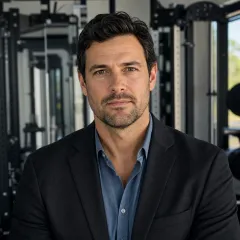
Marcus Feldman
Marcus Feldman is a commercial strength-equipment analyst covering selectorized machines, plate-loaded stations, Smith machines, functional trainers, power racks, benches, barbells, dumbbells, and cable systems. He applies ISO 20957-1 and ISO 20957-2 while comparing rated loads, stability, frame deflection, pulley ratios, cable travel, adjustment increments, guarding, entrapment points, fastener retention, and fatigue cycles. His guides help gym operators, coaches, facility planners, and procurement teams evaluate biomechanics, user capacity, floor layout, maintenance access, durability, and lifecycle value.